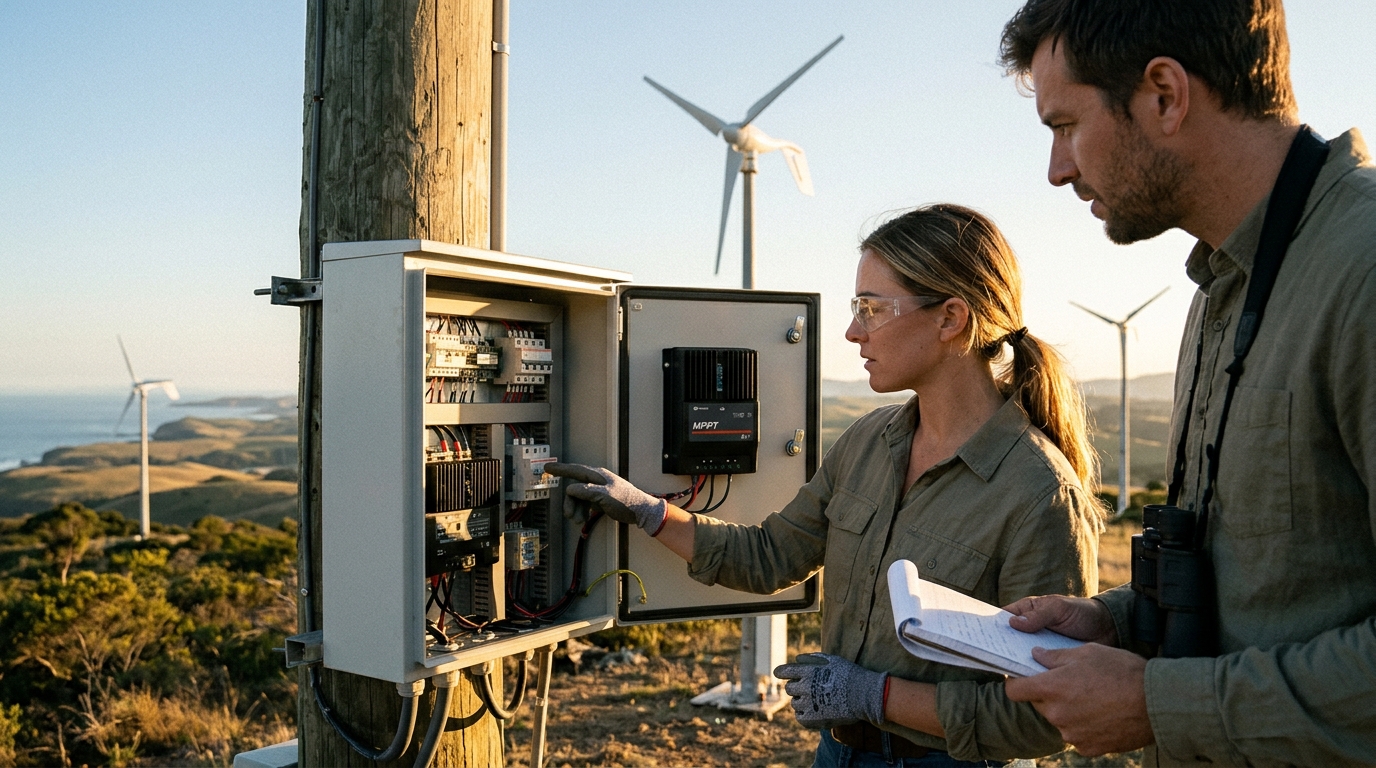
An MPPT charge controller is a power electronics device that maximizes energy harvest from a wind turbine by continuously adjusting the electrical load to match the turbine's optimal operating point. It converts the variable voltage and current from the generator into a stable, regulated charge for your battery bank. This process significantly increases total energy capture compared to simpler charging methods, especially in variable wind conditions.
How MPPT Technology Works
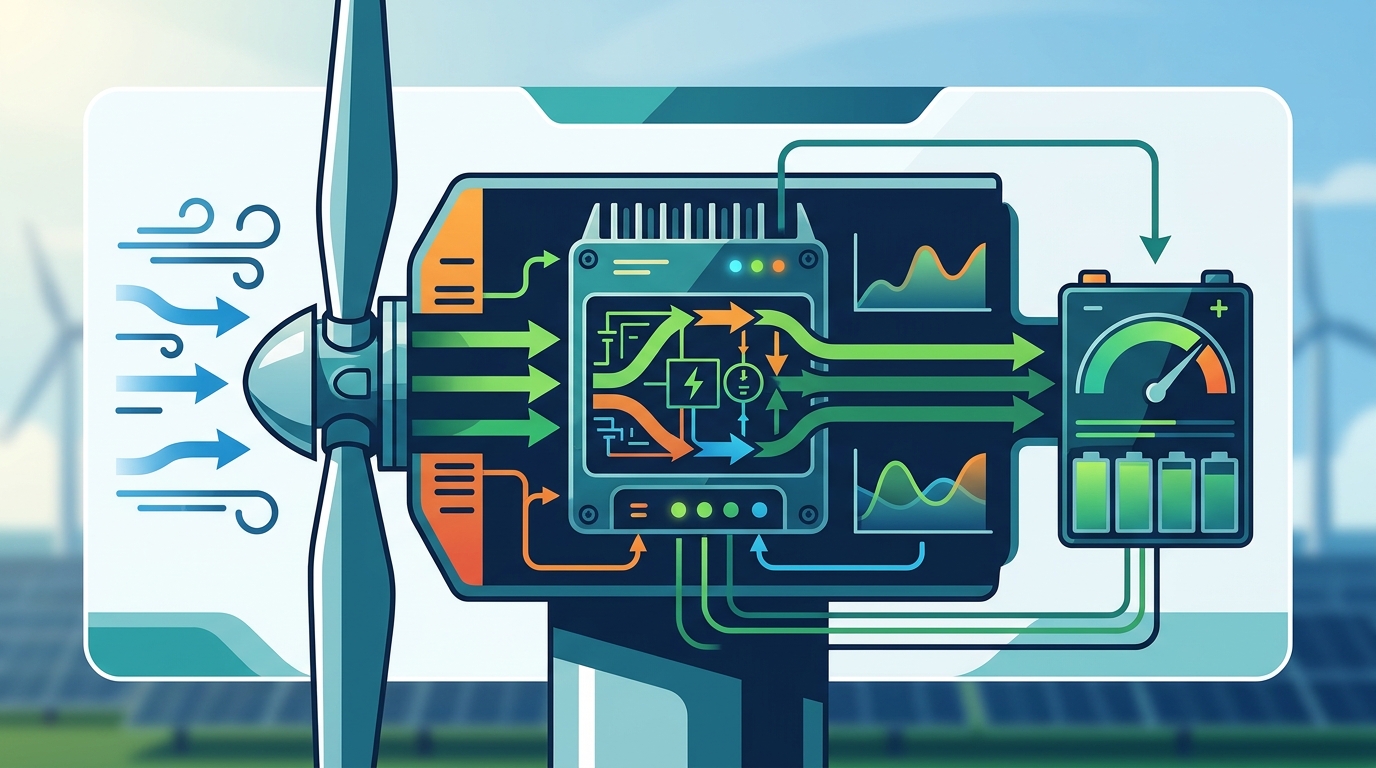
Maximum Power Point Tracking is a control algorithm that finds the specific voltage and current combination where a power source produces the most energy. In a wind turbine system, the generator produces a variable three-phase AC output that is first rectified to DC. The MPPT controller then acts as a DC-DC converter, adjusting the voltage seen by the turbine to keep it operating at its peak efficiency point.
This is critical because wind speed fluctuates constantly. A turbine has a specific tip-speed ratio where it extracts the most energy from the wind. If the electrical load is too high or too low, the turbine spins at a suboptimal speed, wasting potential energy. The MPPT controller dynamically changes the load to ensure the turbine spins at the ideal speed for the current wind conditions. This results in higher energy yield, particularly during low to moderate wind speeds where the difference is most pronounced.
MPPT vs. PWM Controllers
Pulse Width Modulation (PWM) is a simpler, older charging technology that acts like a switch. It connects the source directly to the battery and then chops the current in pulses to regulate the charge voltage. While PWM controllers are cheaper and simpler, they are less efficient. They force the source to operate at the battery's voltage, which is often far from the source's maximum power point.
MPPT controllers, by contrast, use a more complex circuit with inductors and transistors to step down the voltage while increasing the current. This allows the turbine to operate at a higher voltage than the battery, extracting more power. For a 48V battery system, an MPPT controller can harvest significantly more energy from a wind turbine than a PWM controller, especially when the turbine's optimal operating voltage is higher than the battery's nominal voltage. The efficiency gain typically ranges from 20% to 30%, making MPPT the standard for modern off-grid systems.
Integration with Wind Turbines
Modern wind turbines are often designed with MPPT compatibility in mind. The generator produces a three-phase AC output, which is rectified to DC. The MPPT controller then manages the charging process. Some controllers are designed specifically for wind turbines, while others are hybrid controllers that can manage both solar and wind inputs. The key is ensuring the controller's voltage and current ratings match the turbine's output.
For example, a 1000W horizontal wind turbine might have a rated voltage of 48V. An MPPT controller with a maximum input voltage of 100V or higher would be suitable. The controller must also handle the peak current of the turbine, which can be higher than the rated current during gusts. Proper sizing ensures the controller does not overheat or fail under load. Nova Bliss offers a range of wind turbines and controllers that are designed to work together, ensuring compatibility and optimal performance.
Hybrid Solar and Wind Systems
Many off-grid systems use both solar panels and wind turbines. In these hybrid systems, an MPPT controller can manage both inputs simultaneously. This is particularly useful because wind and solar resources are often complementary. When the sun is out, the solar panels generate power, and when it is windy, the wind turbine generates power. The MPPT controller ensures that both sources are harvested at their maximum power points.
Hybrid controllers often have separate MPPT inputs for solar and wind. This allows the controller to optimize each source independently. For instance, a hybrid controller might have a 2000W solar input and a 6000W wind input. The controller then combines the power from both sources to charge the battery bank. This flexibility makes hybrid systems more reliable and efficient than single-source systems. Nova Bliss provides hybrid controllers that support both solar and wind inputs, making them ideal for comprehensive off-grid solutions.
Selecting the Right Controller
Choosing the right MPPT controller involves matching its specifications to your system. Key factors include the battery voltage, the turbine's rated power, and the maximum input voltage. The controller's continuous current rating must be higher than the turbine's maximum current. Additionally, the controller should have protection features such as over-voltage, under-voltage, and short-circuit protection.
For a 48V system, a controller with a 100A continuous rating is often sufficient for a 1000W turbine. However, if you plan to expand your system in the future, it is wise to choose a controller with a higher rating. This provides headroom for additional panels or a larger turbine. Nova Bliss offers a variety of MPPT controllers with different ratings and features, allowing you to find the perfect match for your system. Their team can help you select the right controller based on your specific needs and budget.
Key Takeaways
- MPPT controllers maximize energy harvest by adjusting the electrical load to match the turbine's optimal operating point.
- MPPT is significantly more efficient than PWM, especially in variable wind conditions.
- Hybrid controllers can manage both solar and wind inputs, improving system reliability.
- Proper sizing of the MPPT controller is critical to prevent overheating and ensure longevity.
- MPPT controllers are the standard for modern off-grid wind turbine systems.
- Nova Bliss offers a range of compatible wind turbines and MPPT controllers for off-grid use.
Frequently Asked Questions
What is the main difference between MPPT and PWM controllers?
MPPT controllers use a DC-DC converter to maximize power harvest, while PWM controllers act as a simple switch. MPPT is more efficient and can harvest more energy, especially from sources with a higher optimal voltage than the battery.
Can I use a solar MPPT controller for a wind turbine?
Yes, many solar MPPT controllers can be used for wind turbines, provided the voltage and current ratings match. However, dedicated wind turbine controllers or hybrid controllers are often a better fit, as they are designed to handle the specific characteristics of wind power.
How much more energy can an MPPT controller harvest compared to PWM?
MPPT controllers can typically harvest 20% to 30% more energy than PWM controllers, depending on the system configuration and wind conditions. The gain is most significant during low to moderate wind speeds.
Do I need a special inverter for an MPPT wind turbine system?
No, the MPPT controller outputs a regulated DC voltage that can be used with any standard off-grid inverter. The inverter converts the DC power from the battery bank to AC power for your loads.
Where can I buy a compatible wind turbine and MPPT controller?
Nova Bliss offers a range of wind turbines and MPPT controllers that are designed to work together. You can browse their catalog to find the right combination for your off-grid system.
Conclusion
Understanding how an MPPT charge controller works is essential for designing an efficient off-grid wind turbine system. By continuously adjusting the electrical load, MPPT technology ensures that your turbine operates at its peak efficiency, maximizing energy harvest. Whether you are building a simple off-grid system or a complex hybrid setup, choosing the right MPPT controller is a critical step. Nova Bliss provides the expertise and products you need to build a reliable and efficient off-grid power system. Visit their catalog to explore their range of wind turbines and MPPT controllers, and contact their team for personalized advice on building your system.