
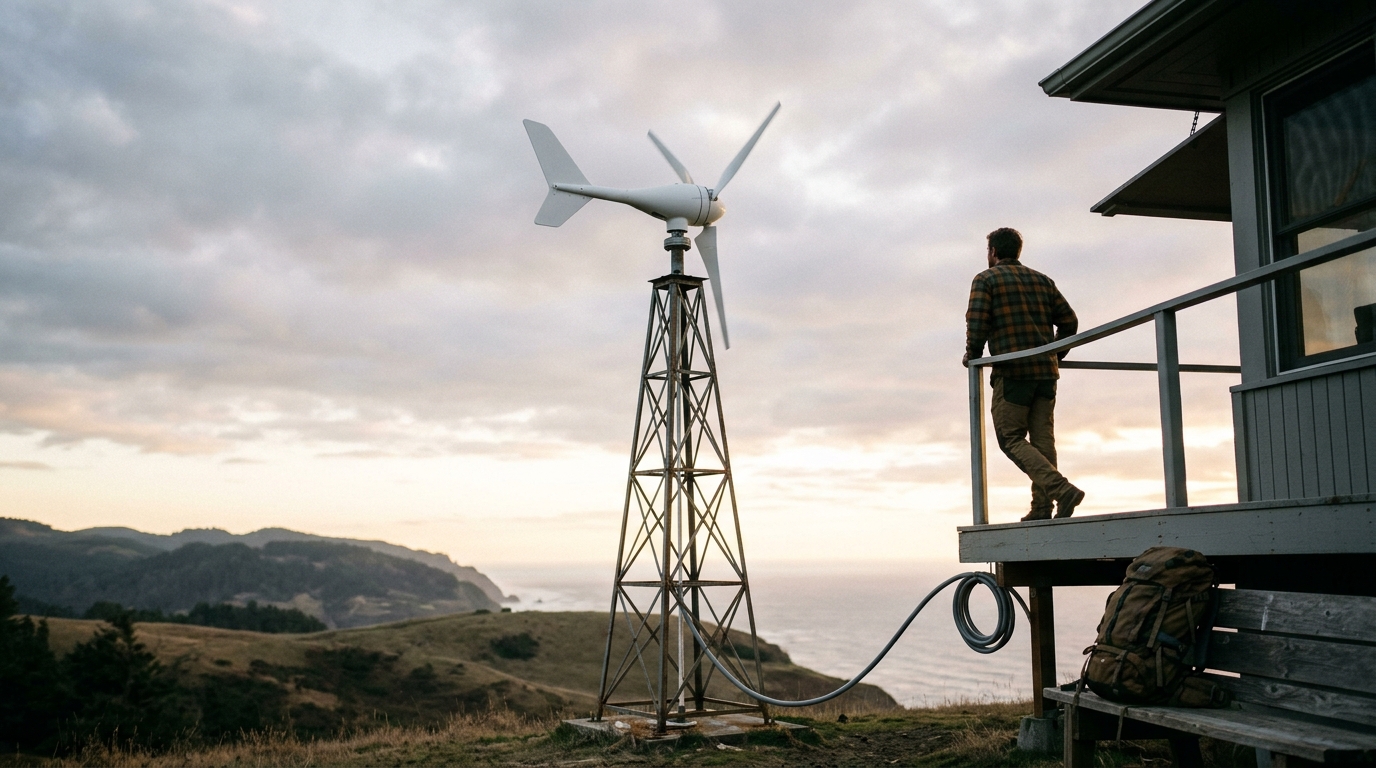
1000W Horizontal Wind Turbine with MPPT Controller for Off-Grid Power
The 1000W horizontal wind turbine with an MPPT charge controller is a compact, low-noise generator designed for residential and small commercial off-grid applications. It converts wind energy into electricity efficiently, even at low wind speeds, by maximizing power transfer to your battery bank. This guide covers the core components of this system, including the MPPT controller and the broader off-grid architecture required for reliable, continuous power. We will explore how these elements work together to provide a stable energy source for homes, farms, and remote properties.
MPPT Charge Controllers
Understanding the role of the charge controller is essential for maximizing the output of your wind turbine. A standard PWM controller simply connects the turbine to the battery, which can lead to significant energy loss. In contrast, an MPPT controller acts as a sophisticated power optimizer that tracks the maximum power point of the generator.
How MPPT Technology Works
Maximum Power Point Tracking is a technique that allows the controller to adjust the electrical load on the turbine. By varying the voltage and current, the controller ensures the turbine operates at its most efficient point, regardless of wind speed. This is particularly important for horizontal-axis turbines, which have a specific RPM range for optimal power generation. The MPPT controller allows the turbine to spin faster than the battery voltage would normally allow, capturing more energy from the wind.
Benefits for Off-Grid Applications
For off-grid users, efficiency is directly tied to cost and reliability. An MPPT controller can increase energy harvest by 20% to 30% compared to a PWM controller. This means you can either use a smaller turbine or a smaller battery bank to achieve the same level of power. Additionally, MPPT controllers often include advanced protection features, such as over-voltage and over-current protection, which extend the lifespan of your lithium or lead-acid batteries. When selecting a 1000W turbine, ensure the included controller is rated for at least 12V, 24V, or 48V systems to match your specific battery configuration.
Off-Grid Systems
A wind turbine is just one component of a complete off-grid power system. To run a home or business independently of the utility grid, you need a balanced ecosystem of generation, storage, and conversion. The 1000W horizontal turbine fits into this ecosystem as a primary or supplemental power source.
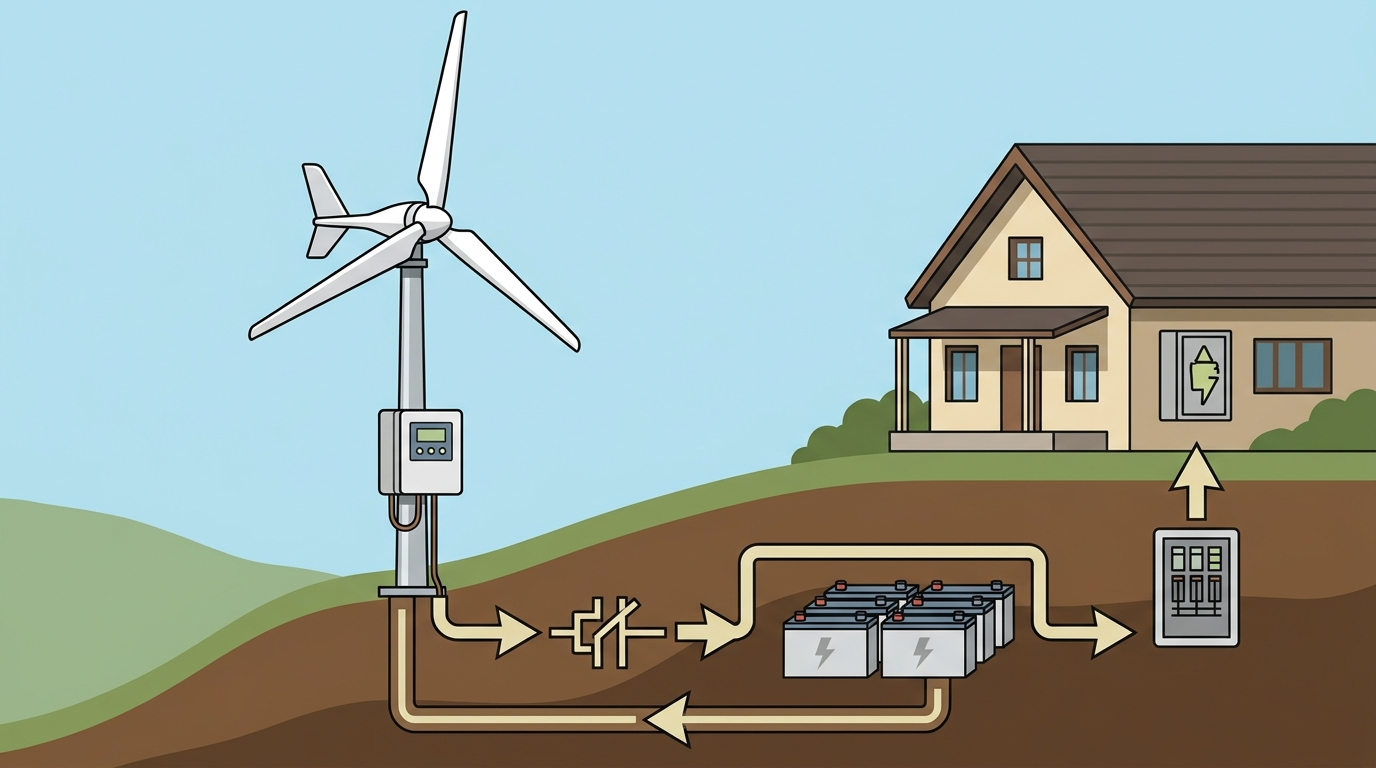
System Architecture and Components
A typical off-grid system consists of four main parts: the generator, the charge controller, the battery bank, and the inverter. The generator captures wind energy, the controller manages the charging process, the batteries store the energy, and the inverter converts DC power to AC power for your appliances. For a 1000W turbine, a 48V battery bank is often recommended to reduce current flow and minimize energy losses in the wiring. This voltage level is standard for many modern off-grid inverters and provides a good balance between efficiency and cost.
Sizing Your Battery Bank
Wind is an intermittent resource, so your battery bank must be large enough to store energy for periods of low wind. A general rule of thumb is to size your battery bank to handle 2 to 3 days of autonomy. For a 1000W turbine, this might mean a bank of 200Ah to 400Ah at 48V. Using LiFePO4 batteries is increasingly popular for these systems due to their long cycle life and high depth of discharge. These batteries can be charged and discharged more deeply than lead-acid batteries, making them more efficient for wind-powered systems.
Integration with Solar and Other Sources
Many off-grid users combine wind turbines with solar panels to create a hybrid system. This approach provides more consistent power, as solar and wind often complement each other seasonally. The MPPT controller in a 1000W turbine can often be configured to accept input from both wind and solar sources. This flexibility allows you to optimize your energy harvest throughout the year. For more complex systems, you may need a hybrid inverter that can manage multiple power sources and provide grid-tie capabilities if needed.
| Component | Function | Typical Specification for 1000W System |
|---|---|---|
| Wind Turbine | Generates DC power from wind | 1000W rated, 12V/24V/48V |
| MPPT Controller | Optimizes charging efficiency | 50A-100A, 12V/24V/48V auto-detect |
| Battery Bank | Stores energy for later use | 48V 200Ah-400Ah LiFePO4 |
| Inverter | Converts DC to AC power | 2000W-3000W pure sine wave |
Key Takeaways
- An MPPT charge controller significantly increases the energy harvest of a wind turbine compared to a PWM controller.
- The 1000W horizontal wind turbine is a suitable size for small homes, cabins, and remote work sites.
- A 48V battery bank is recommended for 1000W systems to improve efficiency and reduce wiring costs.
- LiFePO4 batteries are the preferred choice for off-grid wind systems due to their long lifespan and high efficiency.
- Hybrid systems that combine wind and solar power provide more reliable energy than single-source systems.
- Proper sizing of the battery bank is critical to ensure power availability during periods of low wind.
- Regular maintenance and monitoring of the turbine and controller are essential for long-term system reliability.
Frequently Asked Questions
What is the difference between a horizontal and vertical axis wind turbine?
Horizontal axis wind turbines (HAWTs) have blades that rotate around a horizontal axis, similar to a traditional windmill. They are generally more efficient at converting wind energy into electricity than vertical axis turbines (VAWTs), which rotate around a vertical axis. HAWTs are better suited for consistent, directional winds, while VAWTs can capture wind from any direction. For a 1000W system, a horizontal axis turbine is typically the preferred choice due to its higher efficiency.
Can I use a 1000W wind turbine to power my entire house?
A 1000W wind turbine can power a small home or cabin, but it may not be sufficient for a large, modern house with high energy demands. The amount of power a turbine generates depends on wind speed, turbine efficiency, and system losses. For a typical home, you may need a larger turbine or a hybrid system that includes solar panels. It is important to conduct a load audit to determine your actual energy needs before selecting a turbine size.
How much wind is needed to generate power with a 1000W turbine?
Most 1000W horizontal wind turbines have a cut-in speed of 3 to 4 m/s (6 to 9 mph). This is the wind speed at which the turbine begins to generate power. The rated wind speed, at which the turbine produces its full 1000W output, is typically 12 to 13 m/s (27 to 29 mph). The cut-out speed, at which the turbine shuts down to protect itself from damage, is usually 20 to 25 m/s (45 to 56 mph). It is important to check the specific wind data for your location to ensure that a 1000W turbine will be effective.
Do I need a permit to install a wind turbine?
Permit requirements for wind turbines vary by location. In many areas, you will need a building permit to install a tower and turbine. Some localities may also have zoning restrictions that limit the height or location of wind turbines. It is important to check with your local building department and planning office before purchasing and installing a wind turbine. In some cases, you may need to obtain a variance or special use permit.
How long does a wind turbine last?
A well-maintained wind turbine can last for 20 to 25 years or more. The lifespan of a turbine depends on the quality of the components, the operating environment, and the level of maintenance. Regular inspection and maintenance of the blades, bearings, and electrical connections can help extend the life of your turbine. It is important to follow the manufacturer's recommendations for maintenance and to address any issues promptly.
Can I connect a wind turbine to the grid?
Yes, you can connect a wind turbine to the grid, but you will need a grid-tie inverter and a net metering agreement with your utility company. Grid-tie inverters convert the DC power from the turbine into AC power that is synchronized with the grid. This allows you to export excess power to the grid and import power when the turbine is not generating enough. Net metering allows you to receive credit for the power you export to the grid. It is important to check with your utility company to understand their requirements and policies for grid-tied wind systems.
What is the best battery type for a wind turbine system?
LiFePO4 (Lithium Iron Phosphate) batteries are the best choice for most wind turbine systems. They have a long cycle life, high depth of discharge, and low maintenance requirements. Lead-acid batteries are a cheaper option, but they have a shorter lifespan and require more maintenance. Nickel-metal hydride (NiMH) batteries are another option, but they are less common and more expensive than LiFePO4 batteries. When selecting a battery type, consider your budget, energy needs, and maintenance preferences.
Conclusion
Selecting the right 1000W horizontal wind turbine with an MPPT charge controller is a significant step toward energy independence. By understanding the role of the MPPT controller and the broader off-grid system architecture, you can make an informed decision that meets your specific power needs. Nova Bliss offers a range of high-quality wind turbines and off-grid components that are designed to work together seamlessly. Whether you are looking to power a remote cabin, a farm, or a small business, Nova Bliss has the expertise and products to help you build a reliable and efficient off-grid power system. Visit our wind turbine catalog to explore our selection of 1000W horizontal wind turbines and other off-grid solutions. For more information on how to design your off-grid system, check out our FAQ page or contact our team for personalized advice.