

You can purchase a 5kW complete off-grid solar kit with panels, an inverter, and a battery from specialized renewable energy retailers like Nova Bliss. This guide covers the essential component specifications and the critical purchase verification requirements you must check before ordering to ensure system compatibility and safety.
Kit Component Specifications
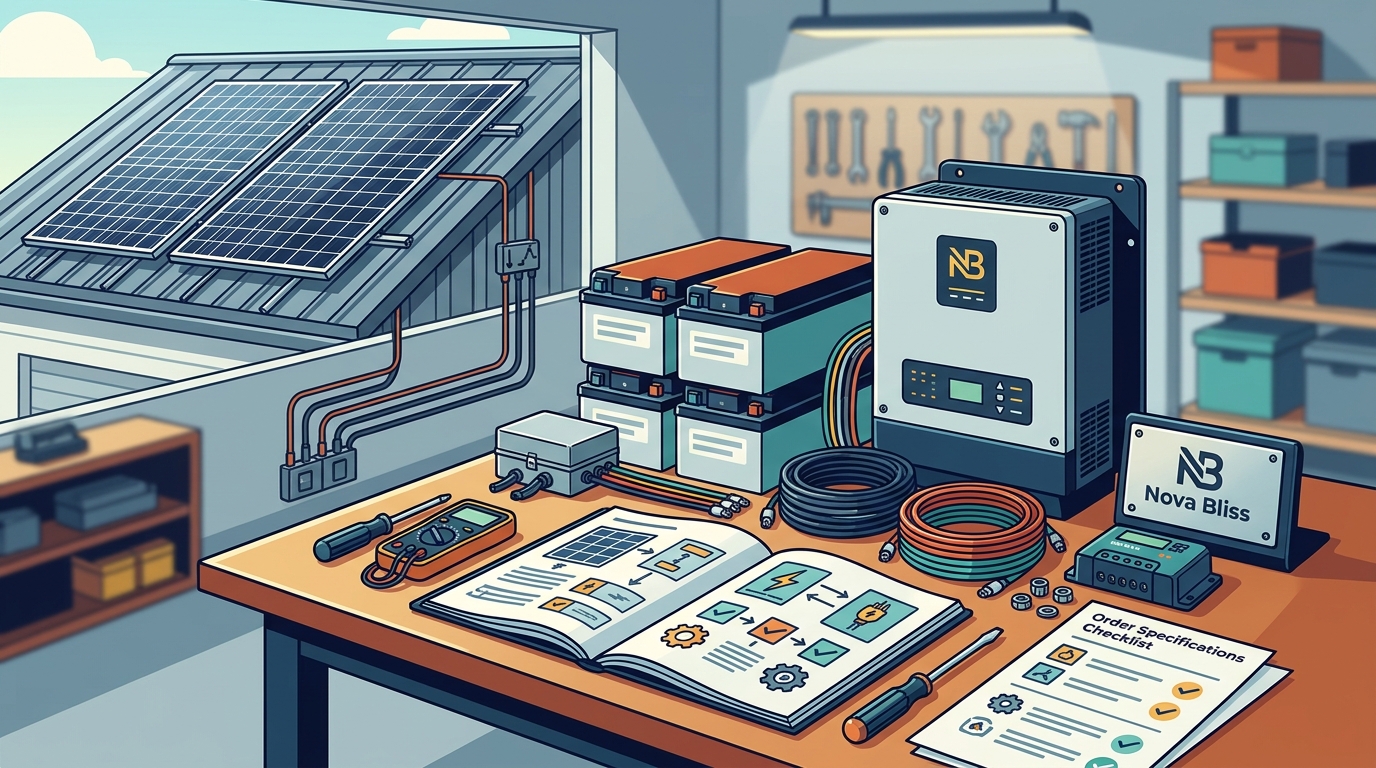
A 5kW off-grid solar kit is a self-contained power generation system that includes photovoltaic panels, a charge controller or hybrid inverter, and energy storage. Understanding the specific technical parameters of each component is the first step in selecting a reliable unit. Nova Bliss offers a 5kW Complete Off-Grid Solar Kit that features LONGI panels and a Growatt inverter, providing a balanced starting point for residential or small commercial applications.
Photovoltaic Panel Configuration
The solar array is the primary energy source for the system. In a typical 5kW configuration, the kit includes high-efficiency monocrystalline silicon panels. For example, a system might utilize 18 panels rated at 560W each, totaling approximately 10.08kW of peak capacity to account for real-world efficiency losses and ensure the inverter can be fully utilized during peak sun hours. These panels are typically A-grade with a 30-year warranty, ensuring long-term energy production.
Inverter and Controller Technology
The inverter converts DC power from the panels and batteries into usable AC power for your home. A 5kW off-grid inverter is designed to handle the full load of the system. Many modern kits, such as those from Nova Bliss, utilize hybrid inverters that support both solar input and battery management. These units often feature pure sine wave output, which is critical for protecting sensitive electronics like computers and medical equipment. The inverter must be compatible with the specific voltage of the battery bank, commonly 48V for systems of this size.
Battery Storage Capacity
Energy storage is what allows an off-grid system to function at night or during cloudy days. A 5kW system typically pairs with a 48V lithium iron phosphate (LiFePO4) battery bank. A common configuration includes a 100Ah to 150Ah battery pack, providing between 5kWh and 7kWh of usable energy. LiFePO4 batteries are preferred for their long cycle life, often exceeding 6,000 cycles, and their thermal stability compared to older lead-acid or NMC lithium chemistries.
| Component | Typical 5kW Spec | Key Function |
|---|---|---|
| Solar Panels | 18 x 560W Mono | Energy Generation |
| Inverter | 5kW Pure Sine Wave | DC to AC Conversion |
| Battery Bank | 48V 100-150Ah LiFePO4 | Energy Storage |
| Mounting | Roof or Ground | Structural Support |
Purchase Verification Requirements
Buying a complete solar kit involves more than just selecting a wattage. You must verify that the components are compatible with your specific electrical needs and local regulations. Failing to check these details can result in a system that is unsafe, inefficient, or non-compliant with local codes.
Voltage and Compatibility Checks
The most common error in off-grid purchases is a voltage mismatch between the inverter and the battery bank. You must confirm that the inverter is rated for the same DC voltage as your batteries. For instance, a 48V inverter will not work with a 24V battery bank. Additionally, check the maximum charging current of the inverter against the maximum charging current of the battery's Battery Management System (BMS). If the inverter can push 100A but the BMS is only rated for 50A, the battery will shut down or degrade rapidly.
Load Analysis and Sizing
Before purchasing, you must perform a home energy load audit. List every appliance you intend to power and note its wattage. Sum these values to determine your continuous load. A 5kW inverter can handle up to 5,000 watts of continuous load, but you should aim to keep your average daily consumption well below the battery capacity to ensure multi-day autonomy. If your total load exceeds the inverter's rating, you will need a larger system or a different inverter configuration.
Regulatory and Safety Compliance
Even off-grid systems must adhere to electrical safety standards. Verify that the kit includes necessary surge protection and grounding components. In many regions, you may need to notify local authorities or obtain permits for the installation of a solar array and battery bank. Nova Bliss provides technical support to help customers navigate these requirements, ensuring that the system is installed safely and legally.
Key Takeaways
- A 5kW off-grid kit typically includes 18 high-efficiency solar panels, a 5kW inverter, and a 48V battery bank.
- LiFePO4 batteries are the standard for modern off-grid systems due to their long cycle life and safety.
- Always verify that the inverter voltage matches the battery bank voltage before purchasing.
- Perform a load audit to ensure your 5kW inverter can handle your peak power demands.
- Check local regulations and permit requirements for off-grid solar installations.
- Look for kits that include pure sine wave inverters to protect sensitive electronics.
- Consider the total cost of ownership, including maintenance and potential battery replacement.
Frequently Asked Questions
What is the difference between a 5kW and a 10kW off-grid system?
A 5kW system is suitable for small homes or essential loads, while a 10kW system can power a larger household with more appliances. The main difference is the size of the solar array and the capacity of the inverter and battery bank.
Can I use a 5kW inverter with a 24V battery bank?
It depends on the specific inverter model. Some 5kW inverters are designed for 24V systems, but 48V is more common for this power level due to lower current and higher efficiency. Always check the inverter's specifications.
How many solar panels are in a 5kW kit?
The number of panels depends on their individual wattage. A common configuration uses 18 panels of 560W each, or 20 panels of 550W each, to achieve the total system capacity.
Do I need a permit for an off-grid solar system?
Permit requirements vary by location. In many areas, you must obtain a permit for the structural installation of the solar array and the electrical connection of the battery bank. Check with your local building department.
What is the lifespan of a LiFePO4 battery?
LiFePO4 batteries typically have a lifespan of 10 to 15 years, with a cycle life of 6,000 to 8,000 cycles. This is significantly longer than lead-acid batteries, which last 3 to 5 years.
Where can I buy a 5kW complete off-grid solar kit?
You can buy a 5kW complete off-grid solar kit from specialized retailers like Nova Bliss, which offers kits with LONGI panels and Growatt inverters. Ensure the retailer provides technical support and a warranty.
Conclusion
Buying a 5kW complete off-grid solar kit is a significant investment in energy independence. By understanding the component specifications and verifying compatibility and regulatory requirements, you can ensure a safe and efficient installation. Nova Bliss provides a range of high-quality solar kits and technical support to help you make the right choice for your needs. Visit the Complete Off-Grid Systems page to explore available options and start your journey toward renewable energy.