

What Factors Affect the Cost of a 10 to 30 kW Vertical Wind Turbine in Ocean Springs?
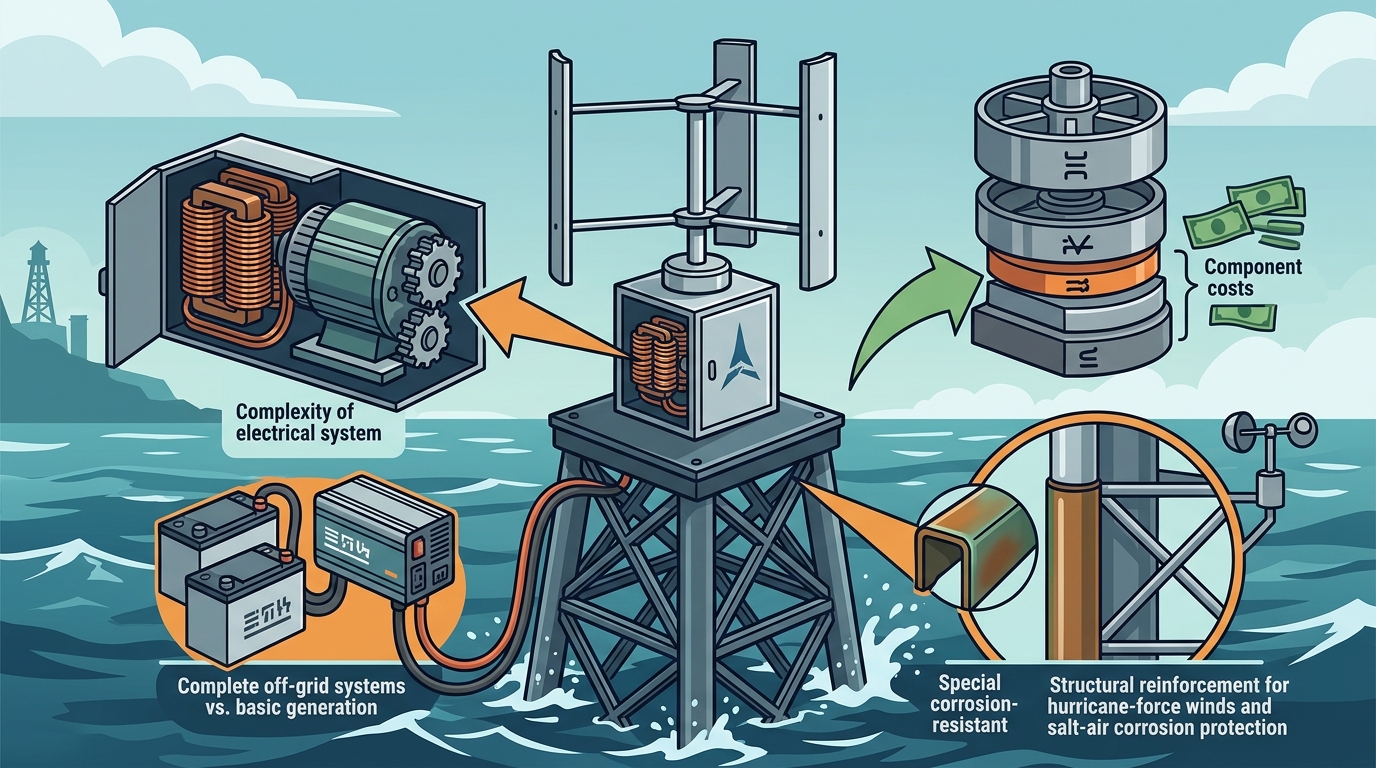
The cost of a 10 to 30 kW vertical wind turbine in Ocean Springs is primarily driven by the rated power output, the complexity of the electrical system, and local installation requirements. Higher wattage units cost more due to larger rotors and heavier components. Additionally, the choice between a basic generator and a complete off-grid system with batteries and inverters significantly impacts the final price. Buyers in the Gulf Coast region must also account for salt-air corrosion protection and structural reinforcement for hurricane-force winds.
Rated Power and Rotor Diameter
The most significant variable in the price of a vertical axis wind turbine (VAWT) is its rated power capacity. A 10 kW unit is fundamentally different in size and material cost from a 30 kW unit. As the power rating increases, the rotor diameter and blade length must expand to capture sufficient kinetic energy from the wind. This scaling effect means that a 30 kW turbine is not simply three times the price of a 10 kW model; the engineering complexity and material volume increase exponentially.
In the context of wind turbines, the physical size of the rotor directly correlates with the cost of the permanent magnet generator. Larger generators require more rare-earth magnets and copper windings, which are expensive materials. For a buyer in Ocean Springs, selecting a 10 kW unit might be sufficient for a small farm or a large residential backup, while a 30 kW unit is typically reserved for commercial applications or large-scale off-grid communities. The price difference between these two tiers can be substantial, often spanning several thousand dollars.
Electrical System Complexity
The electrical configuration of the turbine is a major cost driver. A basic turbine might only include the generator and a simple charge controller. However, most modern installations require a Maximum Power Point Tracking (MPPT) controller to optimize energy harvest. MPPT controllers are more expensive than standard PWM controllers but can increase energy yield by 20 to 30 percent. The choice of voltage, such as 48V, 96V, or 220V, also affects the price. Higher voltage systems are more efficient for long cable runs but require more robust and costly components.
Furthermore, the inclusion of an inverter is a critical cost factor. An off-grid inverter converts the DC power from the battery bank into AC power for household use. Pure sine wave inverters are more expensive than modified sine wave models but are necessary for sensitive electronics. For a 10 to 30 kW system, the inverter alone can represent a significant portion of the total budget. Buyers should consider whether they need a hybrid inverter that can accept both wind and solar input, which adds to the upfront cost but provides greater flexibility.
Installation and Structural Requirements
Installation costs in Ocean Springs are influenced by local environmental conditions. The Gulf Coast region is prone to high humidity and salt air, which can accelerate corrosion. Therefore, turbines installed in this area often require additional protective coatings or marine-grade materials. These materials are more expensive but extend the lifespan of the turbine. Additionally, the structural integrity of the mounting tower is crucial. A 30 kW turbine exerts significantly more force on its tower than a 10 kW unit, requiring a heavier and more expensive tower structure.
The type of tower also affects the cost. A guyed tower is generally less expensive than a self-supporting tower, but it requires more land and can be more difficult to install in certain locations. In Ocean Springs, where land may be limited or valuable, a self-supporting tower might be the preferred option despite the higher cost. The foundation for the tower is another significant expense. A concrete foundation is the most common and cost-effective option, but it requires excavation and pouring, which adds labor costs. For larger turbines, the foundation must be deeper and wider to withstand the increased wind loads.
Local Wind Resources and Site Assessment
The local wind resource in Ocean Springs plays a role in the overall cost-effectiveness of a wind turbine. While the Gulf Coast has moderate wind speeds, they are not as consistent as in some other regions. A site assessment is recommended to determine the average wind speed and direction at the proposed installation site. This assessment can help buyers choose the right size turbine for their location. If the wind resource is weak, a larger turbine might be necessary to generate the desired amount of power, which increases the cost. Conversely, if the wind resource is strong, a smaller turbine might suffice, reducing the initial investment.
Site assessment also involves evaluating the terrain and obstacles. Wind turbines perform best in open areas with minimal turbulence. In Ocean Springs, where there may be trees, buildings, or other structures nearby, the placement of the turbine is critical. Poor placement can lead to reduced energy production and increased mechanical stress, which can shorten the lifespan of the turbine. A professional site assessment can help identify the optimal location and avoid costly mistakes. This service is an additional cost but can provide a significant return on investment by ensuring the turbine operates efficiently.
Key Takeaways
- Rated power is the primary cost driver, with 30 kW units costing significantly more than 10 kW units due to larger rotors and generators.
- Electrical system complexity, including MPPT controllers and inverters, adds to the upfront cost but improves efficiency and reliability.
- Installation in Ocean Springs requires consideration of salt-air corrosion and hurricane-force winds, which may necessitate marine-grade materials and robust towers.
- The type of tower, whether guyed or self-supporting, affects both the cost and the land requirements for the installation.
- A professional site assessment is recommended to ensure the turbine is sized and placed correctly for the local wind resource.
- Long-term maintenance costs should be factored into the total cost of ownership, as marine environments can accelerate wear and tear.
Frequently Asked Questions
How much does a 10 kW vertical wind turbine cost?
The cost of a 10 kW vertical wind turbine varies depending on the brand and included components. A basic unit might cost a few thousand dollars, while a complete system with batteries and inverters can cost significantly more. Buyers should obtain multiple quotes to compare prices and features.
What is the difference between a horizontal and vertical wind turbine?
A horizontal axis wind turbine (HAWT) has blades that rotate around a horizontal axis, while a vertical axis wind turbine (VAWT) has blades that rotate around a vertical axis. VAWTs are generally quieter and can capture wind from any direction, making them suitable for urban or suburban environments. HAWTs are typically more efficient but require yaw mechanisms to face the wind.
Are vertical wind turbines suitable for Ocean Springs?
Vertical wind turbines can be suitable for Ocean Springs, but buyers should consider the local wind resource and environmental conditions. The salt air and humidity can accelerate corrosion, so marine-grade materials are recommended. Additionally, the moderate wind speeds in the region may require a larger turbine to generate sufficient power.
What is an MPPT controller?
An MPPT controller is a type of charge controller that optimizes the power output of a wind turbine or solar panel. It adjusts the voltage and current to maximize the energy harvested from the source. MPPT controllers are more expensive than standard PWM controllers but can increase energy yield by 20 to 30 percent.
How long does a wind turbine last?
The lifespan of a wind turbine depends on the quality of the components and the maintenance schedule. A well-maintained turbine can last 20 to 25 years or more. In marine environments, regular maintenance is essential to prevent corrosion and ensure reliable operation.
Conclusion
Understanding the factors that affect the cost of a 10 to 30 kW vertical wind turbine is essential for making an informed purchase. By considering the rated power, electrical system complexity, installation requirements, and local wind resources, buyers can select a turbine that meets their needs and budget. Nova Bliss offers a range of wind turbines and off-grid systems suitable for the Gulf Coast region. Contact our team to discuss your specific requirements and receive a customized quote.