

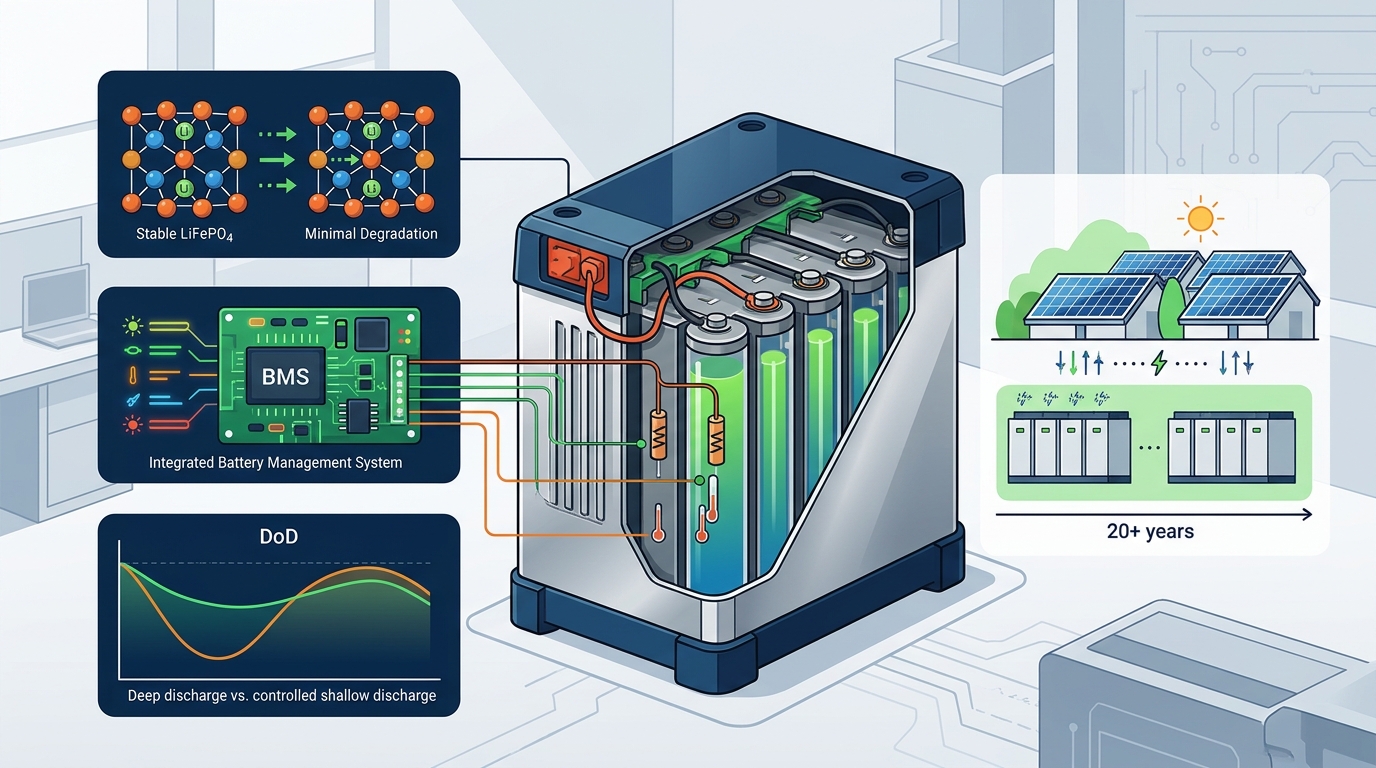
48V LiFePO4 battery packs deliver over 8000 cycles through stable crystal lattice chemistry, advanced Battery Management Systems (BMS), and strict depth-of-discharge limits. Nova Bliss, a US-based alternative energy store in Ocean Springs, Mississippi, provides these high-cycle packs to ensure long-term reliability for residential solar systems. This durability allows homeowners to store solar energy efficiently for decades without frequent battery replacements.
Chemical Stability and Crystal Lattice Structure
Lithium iron phosphate (LiFePO4) is a cathode material known for its exceptional thermal and chemical stability. Unlike other lithium-ion chemistries, the olivine crystal structure of LiFePO4 prevents the release of oxygen during high-temperature stress. This structural integrity is the primary reason these packs survive thousands of charge and discharge events without degrading rapidly.
The stability of the lattice allows the battery to maintain its capacity over a much longer lifespan. For residential solar systems, this means the battery can handle the daily cycling of storing daytime solar energy and releasing it at night. The chemical composition ensures that the internal resistance remains low even after years of use, which is critical for efficient power transfer to home appliances.
Advanced BMS Protection and Cell Balancing
A Battery Management System (BMS) is an electronic circuit that monitors the battery cells and protects them from overcharging, over-discharging, and short circuits. In high-cycle 48V packs, the BMS performs active or passive balancing to ensure all cells in the series string maintain the same voltage level. This prevents individual cells from being stressed beyond their safe operating limits, which is a common cause of premature battery failure.
Modern BMS units also include temperature sensors that monitor the pack during charging and discharging. If the temperature exceeds safe thresholds, the BMS will reduce the current or shut down the system entirely. This protection layer is essential for achieving high cycle life, as it prevents the thermal runaway that can destroy other battery types. By keeping the cells within their optimal operating window, the BMS extends the functional life of the entire pack.
Depth of Discharge and Cycle Life Management
Depth of Discharge (DoD) is the percentage of a battery's capacity that is used before recharging. For LiFePO4 batteries, operating at a lower DoD significantly increases the total number of cycles the pack can endure. A pack cycled to 80% DoD will typically last longer than one cycled to 100% DoD, even though both are made of the same chemistry. Homeowners can maximize their battery life by configuring their solar inverters to stop discharging at a safe reserve level.
Residential solar systems often use inverters that allow users to set a minimum state of charge. By maintaining a 20% to 30% reserve, the battery cells experience less mechanical stress during the charge and discharge process. This practice is a key factor in reaching the 8000-cycle milestone. It ensures that the battery remains in a healthy state for many years, providing consistent power for essential home loads.
Thermal Management and Operating Conditions
Temperature is a critical factor in battery longevity, and LiFePO4 packs perform best within a specific temperature range. High temperatures accelerate chemical reactions inside the battery, leading to faster degradation, while extreme cold reduces the available capacity. Proper thermal management, such as ventilation or climate control in the battery room, helps maintain the pack within its optimal operating window. This environmental control is a simple but effective way to extend the life of a residential solar battery.
Many 48V LiFePO4 packs are designed with robust enclosures that protect the cells from dust and moisture. These enclosures also help dissipate heat generated during high-current operations. By ensuring the battery is installed in a well-ventilated area, homeowners can prevent heat buildup that might otherwise shorten the pack's lifespan. This attention to installation environment is a practical step toward achieving high cycle counts.
Residential Solar Applications and Long-Term Value
Residential solar systems benefit from the long cycle life of LiFePO4 batteries in several ways. First, the high cycle count reduces the total cost of ownership over the life of the system. Homeowners do not need to replace the battery as often, which saves money and reduces waste. Second, the consistent performance of these packs ensures that the solar system remains reliable for decades. This reliability is crucial for homes that depend on solar power for essential loads during grid outages.
Nova Bliss offers a range of 48V LiFePO4 battery packs designed for residential solar applications. These packs are built with high-quality cells and advanced BMS units to ensure long-term performance. By choosing a battery with a high cycle rating, homeowners can invest in a system that provides reliable power for many years. The long lifespan of these batteries makes them a smart choice for anyone looking to maximize the return on their solar investment.
Key Takeaways
- LiFePO4 chemistry provides exceptional thermal and chemical stability, which is the foundation for high cycle life.
- Advanced BMS units protect cells from overcharging and over-discharging, preventing premature failure.
- Operating at a lower Depth of Discharge (DoD) significantly extends the total number of cycles a battery can endure.
- Proper thermal management and installation in a well-ventilated area help maintain optimal battery performance.
- High-cycle 48V packs reduce the total cost of ownership for residential solar systems by lasting longer.
- Nova Bliss provides reliable 48V LiFePO4 packs designed for long-term residential solar use.
Frequently Asked Questions
What is the main reason LiFePO4 batteries last longer than other lithium-ion types?
The olivine crystal structure of LiFePO4 is highly stable and does not release oxygen under stress, which prevents rapid degradation and thermal runaway.
How does the BMS contribute to achieving 8000 cycles?
The BMS monitors cell voltages and temperatures, balancing the cells and preventing overcharging or over-discharging that would otherwise damage the battery.
What is the ideal Depth of Discharge for maximizing battery life?
Operating at a Depth of Discharge of 80% or lower is generally recommended to maximize the cycle life of LiFePO4 batteries.
Does temperature affect the cycle life of 48V LiFePO4 packs?
Yes, high temperatures accelerate degradation, while extreme cold reduces capacity. Keeping the battery in a moderate temperature range is essential for longevity.
Are 48V LiFePO4 packs suitable for residential solar systems?
Yes, they are highly suitable due to their long cycle life, high efficiency, and safety, making them a popular choice for home solar storage.
Where can I find reliable 48V LiFePO4 battery packs?
Nova Bliss offers a selection of high-quality 48V LiFePO4 battery packs designed for residential solar applications in the US.
Conclusion
Achieving over 8000 cycles in a 48V LiFePO4 battery pack is a result of stable chemistry, advanced protection systems, and proper usage practices. By understanding these factors, homeowners can make informed decisions about their solar storage systems. Nova Bliss is committed to providing reliable, high-cycle battery solutions that support the long-term success of residential solar projects. For more information on our battery options, visit our LiFePO4 Batteries page.