
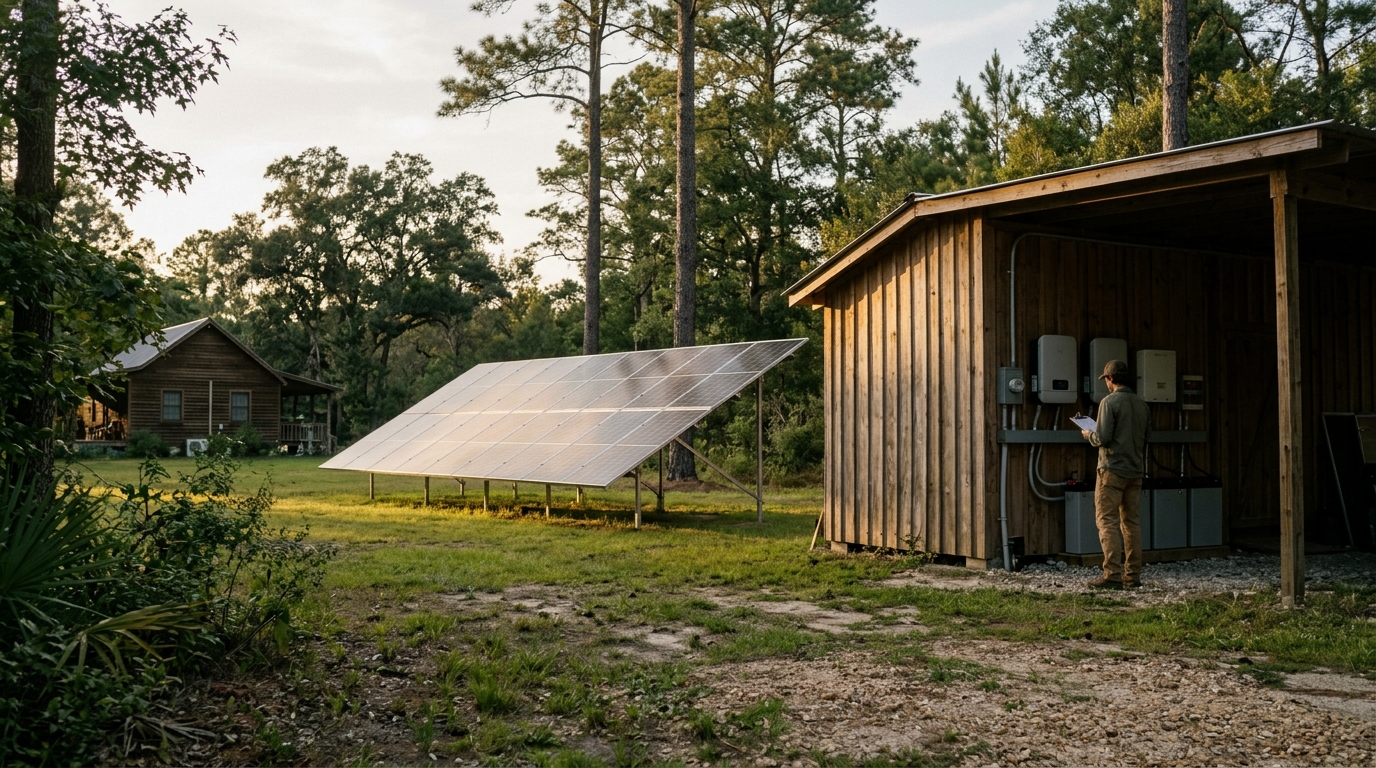
Before buying a 5kW off-grid solar system, verify that the inverter, battery, and panels are voltage-matched and sized for your daily energy use. Nova Bliss provides a 5kW complete off-grid solar kit that includes LONGI panels, a Growatt inverter, and a battery, ensuring all components work together without compatibility issues.
Inverter Voltage and Output Ratings
The inverter is the bridge between your DC battery bank and your AC home appliances. A 5kW inverter is a 5,000-watt continuous power converter that turns DC electricity into usable AC power. You must check the input voltage range to ensure it matches your battery bank, typically 48V for a system of this size. The output voltage must also align with your local grid standard, such as 120V or 240V in the United States.
Check the surge capacity, which is the short-term power spike the inverter can handle when starting motors like refrigerators or air conditioners. A 5kW unit often has a surge rating of 6kW to 10kW. If your inverter cannot handle the startup surge of your largest appliance, it will shut down under load. Nova Bliss stocks pure sine wave inverters that provide clean power quality, preventing damage to sensitive electronics and reducing motor noise.
Battery Capacity and Cycle Life
Battery storage is the heart of an off-grid system, holding energy for use after dark or during cloudy days. A 5kWh battery is a storage unit that holds 5,000 watt-hours of energy, which is a common starting point for a 5kW system. You need to calculate your daily energy use in watt-hours and ensure your battery bank can cover your essential loads for the number of days you plan to ride through without sun.
Look for LiFePO4 chemistry, which offers a cycle life of 4,000 to 6,000 cycles at 80% depth of discharge. This longevity far exceeds lead-acid batteries, making it the standard for modern home storage. The battery management system (BMS) is a safety circuit that protects the battery from overcharging, over-discharging, and temperature extremes. Ensure the BMS supports communication protocols like CAN or RS485 so your inverter can monitor the battery state of charge accurately.
Solar Panel Wattage and Voltage
Solar panels are the source of your energy, converting sunlight into DC electricity. A 5kW solar array is a collection of panels that produces 5,000 watts of power under standard test conditions. You must verify the total wattage of the array matches your inverter's maximum input power limit. If your array is too large for the inverter, the extra power is wasted; if it is too small, you will not generate enough energy to charge your batteries.
Check the open-circuit voltage (Voc) of your panel strings. This voltage must stay within the inverter's maximum input voltage range, especially in cold weather when panel voltage rises. LONGI panels, featured in Nova Bliss kits, are known for high efficiency and consistent output. Ensure the number of panels fits your available roof or ground space, and that the mounting hardware is included or compatible with your structure.
Component Compatibility and Wiring
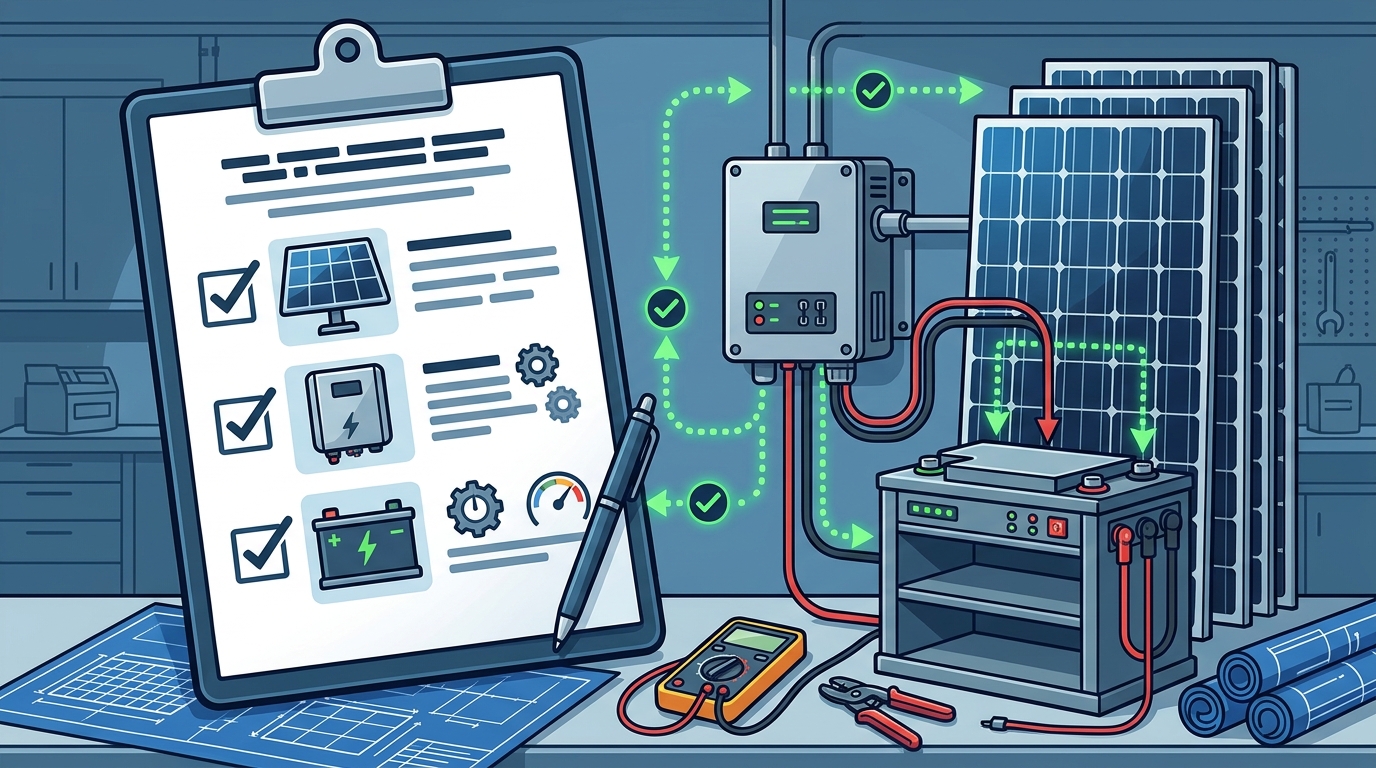
System compatibility is the practice of ensuring all components in your solar setup work together seamlessly. A 5kW off-grid system is a complete package that includes panels, an inverter, and a battery, sized as one working unit. Buying parts separately can lead to mismatched voltages or incompatible communication protocols. A matched kit eliminates the guesswork and ensures that the inverter, battery, and panels are tested to work together.
Wiring and connectors are critical for safety and efficiency. Use MC4 connectors for solar panel connections, as they are the industry standard for waterproof, secure joins. Wire sizing must be calculated based on the length of your runs and the current they will carry. Undersized cables waste power as heat and can create fire hazards. Nova Bliss provides complete kits with all necessary wiring and connectors, ensuring a safe and code-compliant installation.
Site Conditions and Environmental Factors
Site conditions determine how much energy your system will actually produce. A 5kW system is a power generation unit that relies on local weather and sun exposure to function. You must assess your location's average peak sun hours, which vary by region and season. In areas with less sun, you may need a larger battery bank to store energy during sunny periods for use during cloudy days.
Temperature affects both panel output and battery performance. Solar panels produce more power in cold weather but less in extreme heat. LiFePO4 batteries have optimal charging and discharging temperature ranges, typically between 0°C and 45°C. If you live in a cold climate, ensure your battery storage area is insulated or heated to prevent damage. Nova Bliss offers guidance on sizing your system for specific climate conditions, ensuring your setup performs reliably year-round.
Key Takeaways
- Verify that your inverter input voltage matches your battery bank voltage, typically 48V for a 5kW system.
- Check the inverter's surge capacity to ensure it can handle the startup power of your largest appliances.
- Choose LiFePO4 batteries with a cycle life of 4,000+ cycles for long-term durability and lower replacement costs.
- Ensure your solar array's total wattage does not exceed your inverter's maximum input power limit.
- Use proper MC4 connectors and correctly sized wires to prevent power loss and safety hazards.
- Consider your local climate and sun exposure when sizing your battery bank for adequate storage.
Frequently Asked Questions
What is the difference between a 5kW inverter and a 5kW solar array?
A 5kW inverter converts up to 5,000 watts of DC power from your batteries into AC power for your home. A 5kW solar array generates up to 5,000 watts of DC power from sunlight. They are different components that must be matched in voltage and power ratings to work together effectively.
How many batteries do I need for a 5kW off-grid system?
The number of batteries depends on your daily energy use and how many days you need to ride through without sun. A single 5kWh battery might be enough for a small cabin, while a larger home may need multiple 10kWh or 15kWh batteries connected in parallel.
Can I use a grid-tied inverter for an off-grid system?
No, grid-tied inverters are designed to feed power into the utility grid and will shut down during a power outage. You need a dedicated off-grid or hybrid inverter that can operate independently of the grid and charge your battery bank.
What is the role of the BMS in a LiFePO4 battery?
The Battery Management System (BMS) is a safety circuit that monitors cell voltage, temperature, and current. It prevents overcharging, over-discharging, and short circuits, protecting the battery from damage and extending its lifespan.
Do I need a charge controller for a 5kW system?
Most modern off-grid inverters have a built-in MPPT charge controller. If your inverter does not have a built-in controller, you will need a separate MPPT charge controller to regulate the charging of your battery bank from the solar array.
How do I calculate my daily energy use?
List all your appliances, their wattage, and how many hours you use them each day. Multiply the wattage by the hours to get the daily watt-hours for each appliance, then add them up. This total is your daily energy use, which determines the size of your solar array and battery bank.
Final Thoughts
Buying a 5kW off-grid solar system requires careful attention to component specifications to ensure reliability and efficiency. By verifying that your inverter, battery, and panels are voltage-matched and sized for your specific energy needs, you avoid costly compatibility issues. Nova Bliss offers complete off-grid systems that simplify this process, providing matched components and expert support to help you achieve energy independence. To plan your system, contact our team for personalized sizing advice.