

Where to Buy a 3 to 4 kW Vertical Wind Turbine with Inverter for Off-Grid Homes
You can buy a 3 to 4 kW vertical wind turbine with an inverter for an off-grid home from specialized renewable energy retailers like Nova Bliss. This guide covers how to choose the right model, verify technical claims, understand costs, and navigate local installation rules for reliable off-grid power.
How to Choose a Quality Turbine
Choosing a 3 to 4 kW vertical axis wind turbine (VAWT) requires looking beyond the nameplate wattage. A vertical axis wind turbine is a generator design where the main rotor shaft is set perpendicular to the ground, allowing it to capture wind from any direction without a yaw mechanism. For off-grid homes, the quality of the permanent magnet generator (PMG) is the single most important factor. Look for units that use rare-earth permanent magnets rather than wound stators, as PMGs are more efficient at low wind speeds and require less maintenance.
Generator Technology
Most high-quality VAWTs use a three-phase AC permanent magnet generator. This design produces a cleaner sine wave than DC generators and is more compatible with modern inverters. Check if the turbine includes a magnetic levitation (maglev) bearing system. Maglev bearings reduce friction significantly, allowing the turbine to start spinning at lower wind speeds, often around 1.3 m/s to 2 m/s. This is critical for off-grid sites where wind is intermittent.
Blade Material and Aerodynamics
Blade material determines durability and noise levels. Nylon fiber and glass fiber blades are common in the 3 to 4 kW range. Glass fiber blades are generally more rigid and durable but can be heavier. Nylon blades are lighter and quieter but may degrade faster under UV exposure. Ensure the blades are precision injection molded to match an optimized aerodynamic shape. This enhances wind energy utilization and annual output.
Specific Questions to Ask Before Buying
Before committing to a purchase, you must ask the supplier specific technical questions. Vague answers are a red flag. A reputable supplier should provide detailed specifications for every component.
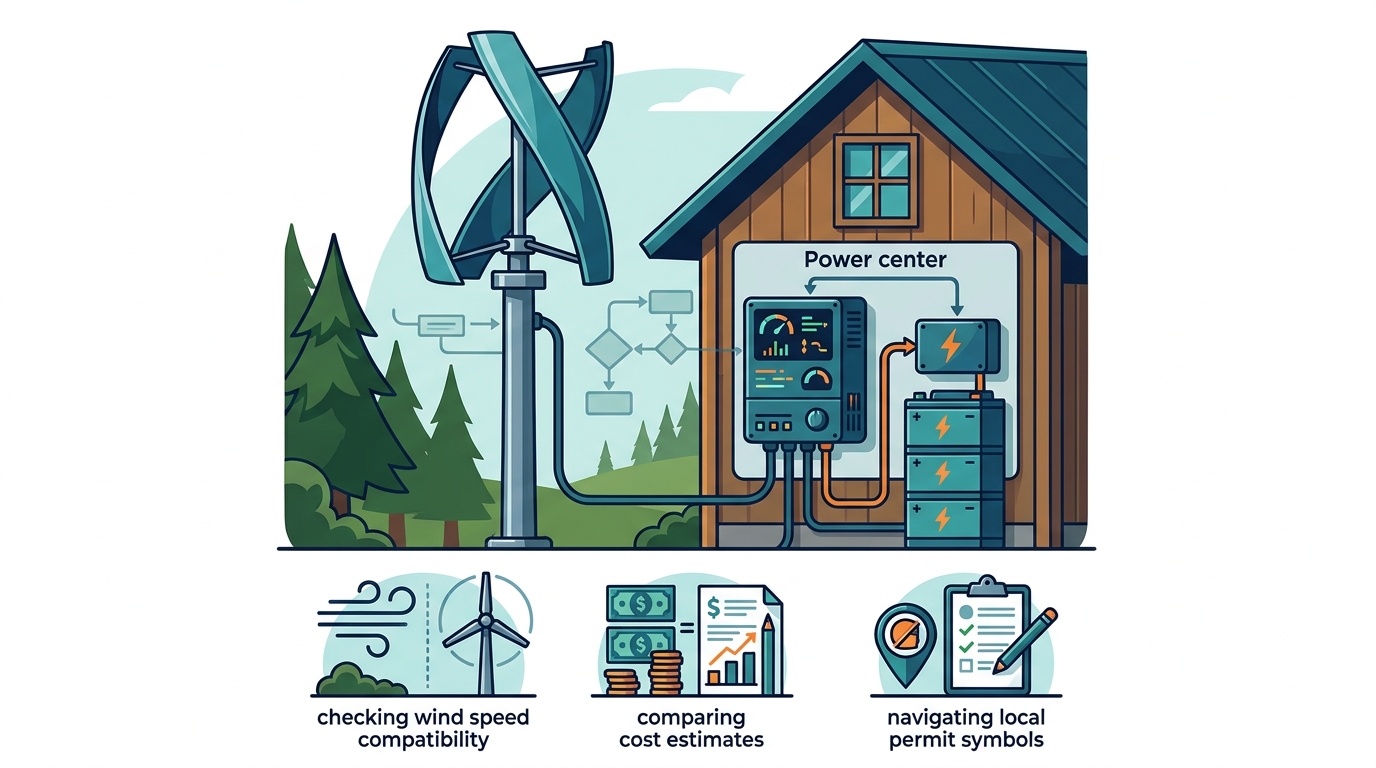
Key Technical Questions
- Start-up Wind Speed: What is the minimum wind speed required to generate usable power? For a 3 to 4 kW unit, this should ideally be below 3 m/s.
- Survival Wind Speed: What is the maximum wind speed the turbine can withstand without damage? Look for ratings of at least 40 m/s to 45 m/s.
- Controller Compatibility: Does the turbine come with an MPPT (Maximum Power Point Tracking) controller? MPPT controllers are essential for maximizing energy harvest from variable wind speeds.
- Inverter Output: Is the inverter pure sine wave? Modified sine wave inverters can damage sensitive electronics like laptops and medical devices.
How to Verify Technical Claims
Many online listings contain inflated or inaccurate specifications. You must verify claims independently. Certification marks are a good starting point. Look for CE, ISO9001, or UL certifications. These indicate that the product has undergone third-party testing for safety and performance. However, certification alone does not guarantee efficiency. You should request test data or performance curves from the manufacturer. If a supplier cannot provide a power curve showing output at various wind speeds, be cautious.
The Purchase and Installation Process
The process of acquiring and installing a 3 to 4 kW VAWT involves several distinct stages. First, you select the turbine and inverter combination. Next, you arrange shipping. Many turbines ship from international manufacturers, so shipping times can vary. Upon arrival, you assemble the turbine. Most units require assembly of the hub, blades, and generator. Finally, you install the tower and connect the electrical system.
Assembly and Installation Steps
- Site Assessment: Determine the best location for the tower, considering wind flow and obstructions.
- Tower Installation: Erect the tower. This can be a guyed tower or an independent tower. Ensure the foundation is secure.
- Turbine Assembly: Assemble the rotor and generator. Connect the blades to the hub.
- Electrical Connection: Connect the turbine to the MPPT controller and then to the battery bank. Finally, connect the inverter to the battery and your home loads.
Cost Drivers and Budgeting
Common Mistakes to Avoid
Many off-grid enthusiasts make critical errors when purchasing wind turbines. The most common mistake is underestimating the required tower height. Wind speed increases with altitude. A turbine installed too low will experience turbulent, inconsistent wind, leading to poor performance and increased noise. Another mistake is ignoring the noise factor. Vertical axis turbines are generally quieter than horizontal ones, but they can still produce noise. Check the decibel rating. Finally, do not skip the surge protection. Wind turbines can generate voltage spikes that damage inverters and batteries. Always include surge protection in your system design.
Vertical vs. Horizontal Axis Turbines
Understanding the difference between vertical and horizontal axis wind turbines (HAWTs) is crucial. A horizontal axis wind turbine is a design where the rotor shaft is parallel to the ground, resembling a traditional windmill. HAWTs are generally more efficient in steady, strong winds because they face directly into the wind. However, they require a yaw mechanism to track wind direction, which adds complexity and maintenance. VAWTs are omnidirectional, meaning they capture wind from any direction without a yaw mechanism. This makes them simpler and more reliable for sites with variable wind patterns. VAWTs are also quieter and safer for birds. However, they are typically less efficient than HAWTs of the same size. For a 3 to 4 kW system, a VAWT is a good choice if you prioritize simplicity and low maintenance over peak efficiency.
| Feature | Vertical Axis (VAWT) | Horizontal Axis (HAWT) |
|---|---|---|
| Wind Direction | Omnidirectional | Requires Yaw Mechanism |
| Noise Level | Lower | Higher |
| Maintenance | Lower (No Yaw) | Higher (Yaw Bearings) |
| Efficiency | Moderate | High |
| Best For | Variable Wind, Urban/Suburban | Steady Wind, Open Areas |
Sizing for Specific Off-Grid Scenarios
The right size for your off-grid home depends on your energy consumption and local wind resources. A 3 to 4 kW turbine is suitable for a small to medium-sized off-grid home. It can power essential loads like lighting, refrigeration, and electronics. If you have high energy demands, such as electric heating or a well pump, you may need a larger system or a hybrid setup combining wind and solar. For a hybrid system, ensure the inverter and controller can handle both wind and solar inputs. Nova Bliss offers hybrid controllers that support solar panel input alongside wind power, allowing for a more robust off-grid solution.
Regulations and Consumer Protections
Local Installation Considerations
Local wind patterns significantly impact turbine performance. You need to assess the average wind speed at your site. If your area has low average wind speeds, a 3 to 4 kW turbine may not generate enough power to meet your needs. Consider the terrain. Flat, open areas are ideal for wind turbines. Obstructions like trees and buildings create turbulence, which reduces efficiency and increases wear. If you are in a coastal area, consider the salt air. Salt corrosion can damage turbine components. Look for units with corrosion-resistant materials. Nova Bliss is based in Ocean Springs, Mississippi, and understands the challenges of coastal and humid environments. They offer products designed to withstand these conditions.
Optimal Timing for Purchase and Installation
Timing your purchase and installation can impact cost and performance. Wind resources vary by season. In many regions, wind is stronger in winter and spring. Installing your turbine before the windy season allows you to maximize energy harvest. Additionally, consider supply chain delays. International shipping can take several weeks. Order your turbine early to avoid delays. If you are planning a hybrid system, coordinate the installation of solar panels and the wind turbine to minimize labor costs. Spring and fall are often the best times for installation due to moderate weather conditions.
Long-Term Performance and Maintenance
A well-maintained 3 to 4 kW vertical wind turbine can last for 20 years or more. Regular maintenance is essential to ensure long-term performance. Inspect the blades for cracks or damage. Check the bearings for wear. Clean the generator and controller to remove dust and debris. Monitor the system performance using the data from the MPPT controller. If you notice a drop in output, investigate the cause. Regular maintenance extends the life of the turbine and ensures reliable power generation. For more information on maintaining your system, visit the Nova Bliss FAQ page.
Key Takeaways
- Choose a VAWT with a permanent magnet generator and maglev bearings for low start-up speed and high efficiency.
- Verify technical claims by requesting certification marks and performance curves.
- VAWTs are omnidirectional and quieter than HAWTs, making them suitable for variable wind sites.
- Check local zoning laws and noise ordinances before installation.
- Install the turbine at a sufficient height to avoid turbulence and maximize wind capture.
- Regular maintenance is crucial for long-term performance and reliability.
- Consider a hybrid system with solar for more robust off-grid power.
Frequently Asked Questions
What is the difference between a vertical and horizontal axis wind turbine?
A vertical axis wind turbine has a rotor shaft perpendicular to the ground, while a horizontal axis wind turbine has a rotor shaft parallel to the ground. VAWTs are omnidirectional and quieter, while HAWTs are more efficient in steady winds.
How much power can a 3 to 4 kW vertical wind turbine generate?
A 3 to 4 kW turbine can generate up to 3,000 to 4,000 watts in strong, steady winds. Real-world output is typically lower due to variable wind conditions.
Do I need a permit to install a wind turbine?
Yes, many municipalities require a permit for installing wind turbines. Check with your local zoning office for specific requirements.
What is an MPPT controller?
An MPPT (Maximum Power Point Tracking) controller is a device that maximizes the energy harvest from a wind turbine or solar panel by adjusting the electrical operating point.
How long does a vertical wind turbine last?
A well-maintained vertical wind turbine can last for 20 years or more. Regular maintenance of bearings and blades is essential.
Where can I buy a 3 to 4 kW vertical wind turbine?
You can buy a 3 to 4 kW vertical wind turbine from specialized renewable energy retailers like Nova Bliss Wind Turbines. They offer a range of models with MPPT controllers and inverters.