

What Factors Affect the Cost of a 3 to 4 kW Vertical Wind Turbine System?
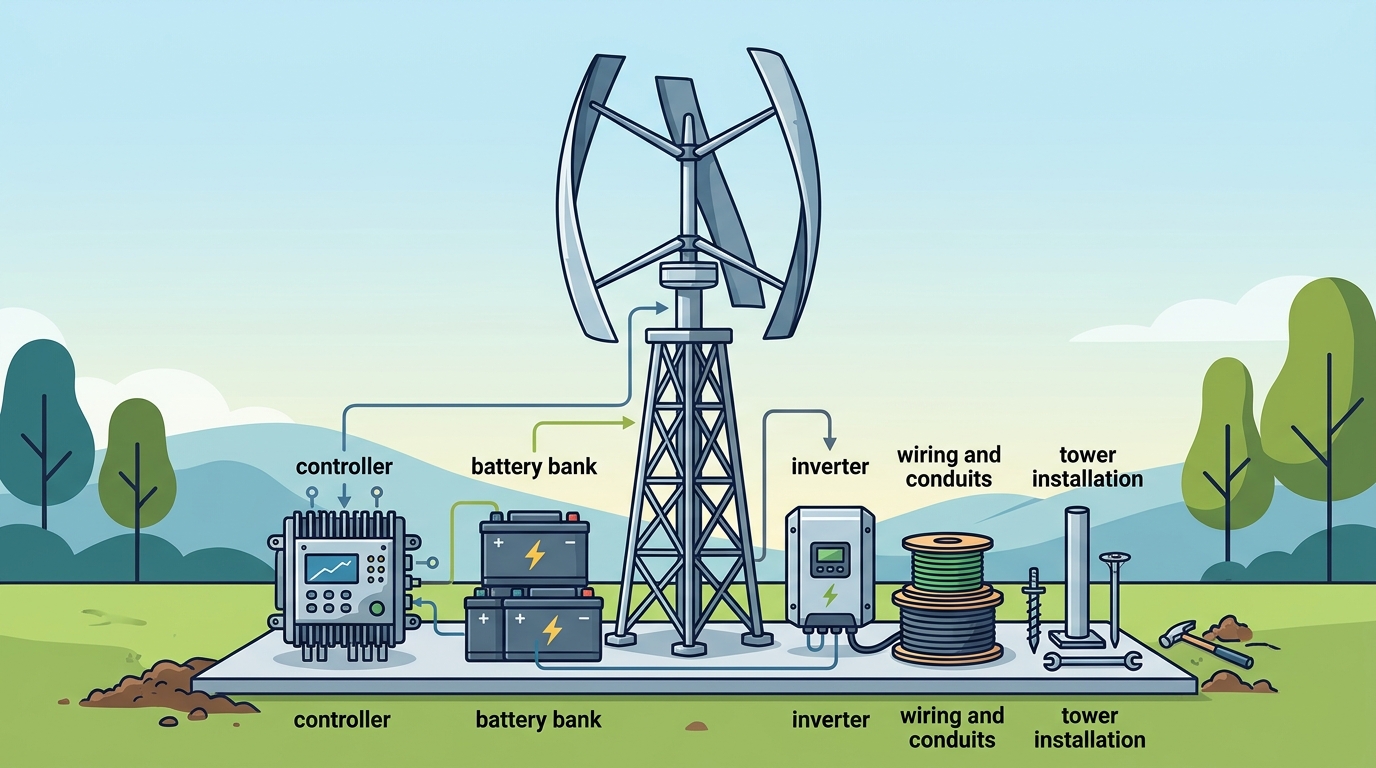
The cost of a 3 to 4 kW vertical wind turbine system is primarily driven by the turbine's rated power, the complexity of the included controller, and the specific voltage configuration required for your battery bank. Additional expenses arise from the inverter, tower installation, and necessary wiring. At Nova Bliss, we provide these systems with transparent pricing to help you budget for a reliable off-grid power source.
Turbine Specifications and Rated Power
The base price of a vertical-axis wind turbine (VAWT) is determined by its rated power output and the materials used in its construction. A 3 kW unit is generally more affordable than a 4 kW model because it requires smaller blades and a less robust generator housing. However, the difference in price is often modest compared to the increase in energy production.
Vertical turbines are designed to capture wind from multiple directions without a yaw mechanism, which simplifies the mechanical structure. This design often results in lower maintenance costs over the system's lifespan. When evaluating a turbine, look at the rotor diameter and blade material, as these factors influence both the initial cost and the long-term durability of the unit.
Controller Type and Voltage Configuration
The charge controller is a critical component that manages the power flow from the turbine to the battery bank. The cost varies significantly depending on whether you choose a basic PWM controller or a more advanced MPPT (Maximum Power Point Tracking) controller. MPPT controllers are more expensive but can extract significantly more energy from the turbine, especially in variable wind conditions.
Voltage configuration also impacts the total system cost. A 3 to 4 kW system can be configured for 24V, 48V, or even 120V systems. Higher voltage systems require more expensive controllers and inverters but reduce the current draw, which allows for thinner and less expensive wiring. At Nova Bliss, we offer various voltage options to match your existing battery infrastructure.
Inverter and Battery Storage Requirements
A wind turbine produces DC power, but most household appliances require AC power. Therefore, an inverter is a mandatory addition to the system cost. The price of the inverter depends on its capacity and whether it is a pure sine wave or modified sine wave model. Pure sine wave inverters are more expensive but are necessary for sensitive electronics and motor-driven appliances.
Battery storage is the most significant variable in the total system cost. A 3 to 4 kW turbine can charge a large battery bank, but the cost of the batteries themselves can exceed the cost of the turbine. Lithium iron phosphate (LiFePO4) batteries are more expensive upfront than lead-acid batteries but offer a much longer cycle life and higher depth of discharge. You can explore our LiFePO4 battery options to find a storage solution that fits your budget.
Tower Installation and Site Preparation
The physical installation of the turbine involves a tower, foundation, and wiring. The cost of the tower depends on its height and material. A taller tower is generally more expensive but provides access to stronger and more consistent winds, which increases the system's overall energy yield. The foundation must be engineered to withstand the specific wind loads of your location.
Site preparation includes trenching for underground wiring and ensuring proper grounding. These labor-intensive tasks can add several hundred to several thousand dollars to the project cost, depending on local labor rates and soil conditions. Proper installation is crucial for the safety and longevity of the system, so it is worth investing in professional-grade hardware and correct setup.
Wiring, Connectors, and Safety Accessories
The final cost drivers are the electrical components that connect the turbine, controller, batteries, and inverter. This includes heavy-gauge DC cables, MC4 connectors, fuses, and surge protection devices. While these items are individually inexpensive, their total cost adds up quickly, especially for high-power systems that require thick cables to minimize voltage drop.
Safety accessories, such as surge protectors and disconnect switches, are essential for protecting your investment from lightning strikes and electrical faults. These components are relatively affordable but are critical for the long-term reliability of your off-grid system. You can find the necessary power accessories to complete your build safely and efficiently.
Key Takeaways
- Rated power and blade material determine the base price of the vertical turbine.
- MPPT controllers cost more than PWM but provide higher energy efficiency.
- Voltage configuration (24V vs 48V) affects the cost of controllers and wiring.
- Battery storage is often the most expensive component of the entire system.
- Tower height and foundation engineering significantly impact installation costs.
- Surge protection and proper wiring are essential for system safety and longevity.
Frequently Asked Questions
How much does a 3 kW vertical wind turbine cost?
Is a vertical-axis turbine better than a horizontal-axis turbine?
Vertical-axis turbines are better for sites with turbulent or multi-directional winds because they do not need to yaw into the wind. They are also quieter and safer for birds. Horizontal-axis turbines are generally more efficient in steady, unidirectional winds.
What size inverter do I need for a 4 kW turbine?
You should choose an inverter with a continuous rating that matches or exceeds your largest simultaneous load. For a 4 kW turbine, a 4 kW to 5 kW pure sine wave inverter is a common starting point, but your specific household loads will determine the exact size required.
Do I need a battery bank for a wind turbine?
Yes, a battery bank is essential for off-grid systems because wind is intermittent. The batteries store energy produced during windy periods so you can use it when the wind is calm. The size of the bank depends on your daily energy consumption and the number of days of autonomy you require.
How tall should the tower be for a 3 to 4 kW turbine?
The tower should be tall enough to clear any nearby obstacles, such as trees or buildings, by at least 10 feet. A common height for small turbines is 20 to 30 feet, but the optimal height depends on the specific wind profile of your site.