

7 Factors That Affect the Price of a 10 to 30 kW Vertical Wind Turbine
The cost of a 10 to 30 kW vertical wind turbine is not determined by a single sticker price. It is shaped by the generator technology, the controller type, and the specific voltage configuration you select. Nova Bliss, a US-based supplier in Ocean Springs, Mississippi, offers these systems with various configurations that directly impact the final investment. Understanding these variables helps you budget accurately for your off-grid or hybrid power needs.
1. Generator Technology and Magnet Type
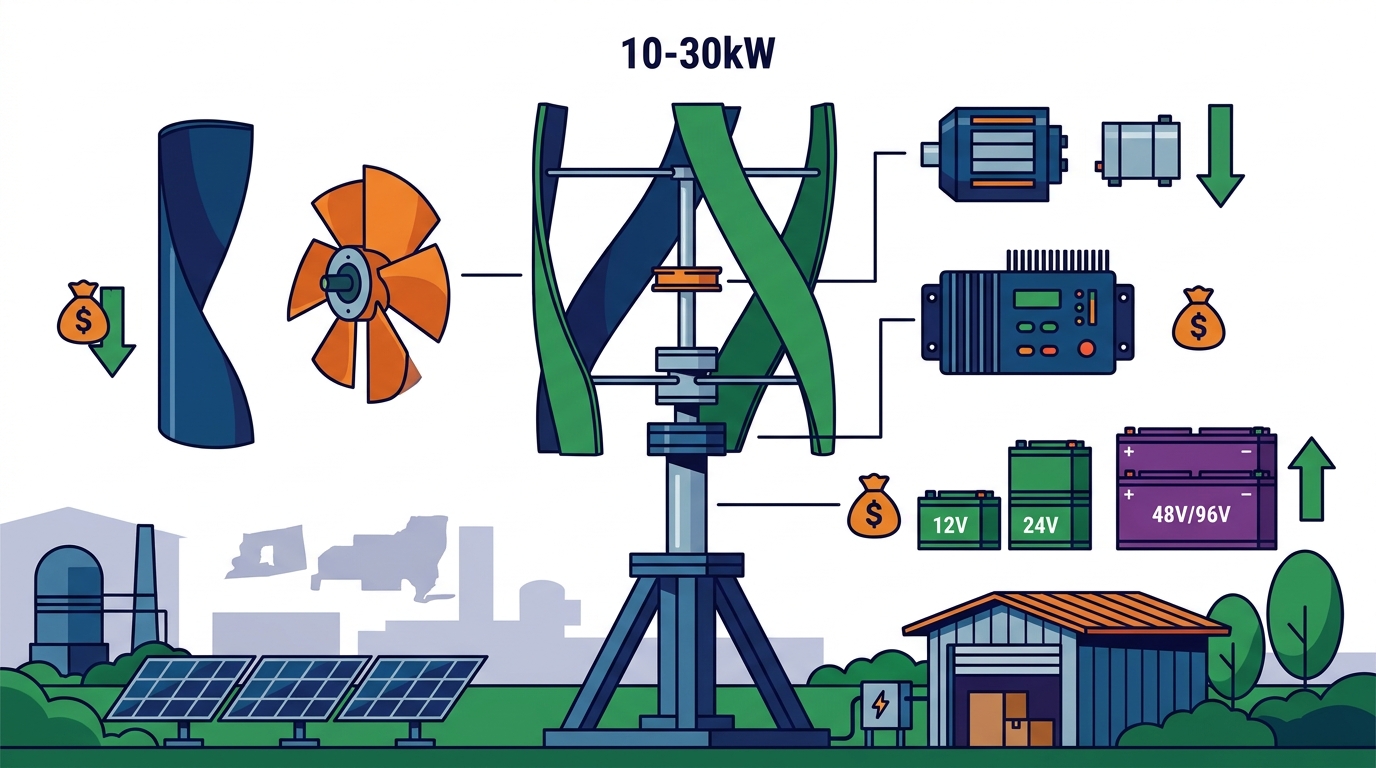
The core generator design is the primary driver of the base unit cost. Vertical axis turbines often utilize rare-earth permanent magnet generators or maglev designs to achieve low start-up speeds. These specialized components are more expensive than standard induction motors but offer higher efficiency and lower maintenance. The choice between a standard permanent magnet alternator and a high-efficiency maglev unit significantly shifts the price point.
2. Controller Type and Hybrid Capabilities
The charge controller determines how much of the wind energy you can actually capture. A basic MPPT controller is standard, but hybrid controllers that support both wind and solar input cost more. These hybrid units allow for low-voltage charging in light winds and can handle higher power inputs, such as 20,000W wind plus 5,000W solar. Selecting a hybrid controller adds to the upfront cost but increases the system's versatility and daily energy yield.
3. Voltage Configuration and System Compatibility
The output voltage options dictate the required inverter and battery bank size. Turbines in the 10 to 30 kW range often offer 12V, 24V, 48V, or 3-phase AC outputs like 220V and 380V. Higher voltage systems reduce current and allow for thinner, cheaper cabling over long distances. However, matching the turbine voltage to your existing battery bank or inverter may require specific variants that carry different price tags.
4. Blade Material and Aerodynamic Design
Blade construction impacts both the durability and the aerodynamic efficiency of the turbine. Many vertical turbines use glass and basalt blades or nylon fiber composites. These materials are chosen for their strength-to-weight ratio and ability to withstand high survival wind speeds, such as 40 m/s or 45 m/s. Premium aerodynamic shapes that enhance wind energy utilization in low wind conditions contribute to a higher manufacturing cost.
5. Inclusion of Off-Grid Inverters
Bundling a pure sine wave inverter changes the total system price. While some listings sell the turbine alone, complete off-grid systems include a matched inverter. These inverters produce clean power compatible with sensitive electronics and come with various plug and voltage options for different countries. The cost of the inverter, which can range from 5kW to 10kW capacity, is a major component of the final package price.
6. Certification and Safety Standards
Compliance with international safety standards adds to the manufacturing overhead. Turbines certified by bodies such as CE, EPA, or ISO9001 undergo rigorous testing for electrical safety and environmental impact. These certifications ensure the equipment meets low-voltage directives and chemical safety standards. While this increases the price, it provides essential peace of mind for residential and commercial installations.
7. Shipping, Logistics, and Assembly Requirements
Logistics and the complexity of assembly influence the total cost of ownership. Large 30 kW units require specific shipping methods and may incur customs duties depending on the destination. Most turbines require assembly and installation, which may involve purchasing additional mounting bases or flanges. Nova Bliss offers free shipping on many orders, but the physical size and weight of the turbine still affect the overall logistics budget.
Frequently Asked Questions
What is the difference between a vertical and horizontal wind turbine price?
Vertical axis turbines often cost more per watt due to complex generator designs like maglev systems, but they are cheaper to install in tight spaces because they do not require yaw mechanisms.
Does the voltage option change the price of the turbine?
Yes, selecting a 48V or 3-phase 380V configuration may cost more than a 12V option because it requires different generator windings and controller logic to manage higher power levels.
Is a hybrid controller worth the extra cost?
A hybrid controller is worth the investment if you plan to add solar panels later, as it allows the system to charge batteries from both wind and sun, maximizing energy capture in varying weather conditions.
What is a maglev generator in a wind turbine?
A maglev generator is a permanent magnet generator that uses magnetic levitation to reduce friction, resulting in lower start-up wind speeds and longer component life.
How does blade material affect the turbine price?
Blades made from glass and basalt or high-grade nylon fiber are more expensive than basic plastic but offer better aerodynamic performance and durability against high wind speeds.